
Apple Valley Sources for Past Residents
Apple Valley previous residents appear in layers, so no single source should carry the whole claim.
The strongest previous-resident work joins records that answer different questions. The Recorder traces document parties. The Assessor fixes a parcel and its present or historical assessment context. Directories and census schedules add household clues. Town permits date construction or change, while obituaries and probate can connect a person to family or an estate. The table keeps the source, time span, physical home, and likely use visible before a search begins.
| Source | Years It Covers | Where Held | What It Shows |
|---|---|---|---|
| Recorder index | 1925-present | San Bernardino County ARC, online index and offices | Grantors, grantees, document type, date, and ownership trail; images are not online |
| Assessment valuations | 1978-present | County Assessor Parcel Access and downloadable files | APN, situs, mailing distinction, values, use, and transfer data where published |
| Criss-cross directories | 1976-present | Arda Haenszel California Room | Address-ordered listed occupants or subscribers, subject to edition coverage |
| Telephone books | 1918-present | California Room | Subscriber and address evidence, with omissions and unlisted numbers |
| Federal census | 1850-1950 public release | NARA, library collections, and genealogy databases | Household members, age, birthplace, occupation, and tenure at a census date |
| Town permits and planning | Online start not verified | Town OpenGov, Building and Safety, or focused request | Project address, applicant, contractor, work, inspection, and change chronology |
| Aerial and USGS series | Local checkpoints from 1953-2016 | Town environmental reports and map repositories | Vacant or developed land, structures, roads, and site changes |
| Obituaries and probate | Edition and case dependent | California Room, newspapers, Superior Court CAP | Kin, former addresses, heirs, representatives, and estate links |
| Unclaimed property | Current search of older associations | California State Controller | A name and former city association, not a current address or occupancy proof |
Start with the newest stable identifier when the address still exists. Use the Recorder, Assessor, and Town sources for the property trail. Use the library and newspaper shelf for the household trail. If the question concerns a person who died, probate and an obituary can close the trail without treating a living person’s current location as the goal.
Start With an APN for Previous Residents
A previous residents search needs a current parcel key before it reaches older names.
A street number is a weak historical key. It can gain a directional prefix, lose a unit label, move under a tract name, or carry a postal city that predates the Town. The County Assessor’s Parcel Access map turns the current situs address into an APN and a legal-description lead. Save the map result, date, situs, assessee or owner field, mailing address, characteristics, and any transfer date in the downloadable data. Previous residents are easier to trace when the parcel key stays fixed.
The APN is assessment evidence, not a title certificate. The owner mailing address can be outside the parcel, and an owner or assessee is not automatically an occupant. Parcel splits and mergers can also change the APN. For a prior-resident search, preserve every APN and legal description encountered, then compare them with the deed’s vesting and tract or lot language.
Note: A stable legal description often carries a house history farther than a street label that changed with growth, postal use, or incorporation.
Walk the Apple Valley Past-Resident Deed Chain Backward
For previous residents, the backward trail begins with today’s owner or assessee and ends only when the property identity can no longer be bridged.
The San Bernardino County Assessor-Recorder-Clerk index is the ownership spine for previous residents research. Its online catalog reaches from 1925 to the present, but it is not an address search and it is not proof of title. Use the present parcel to get a name, then search the name in the Recorder index. A deed can supply the prior grantor, legal description, vesting, date, and document number needed for the next step.
- Confirm the current APN, situs, and legal description in Parcel Access. Keep the mailing address in a separate field.
- Search the current owner as grantee near the Assessor transfer date, using spelling variants and related document types.
- Order or view the deed, then record its grantor, grantee, vesting, recording date, document number, and legal description.
- Search the grantor as an earlier grantee. Repeat the comparison with the legal description, not just the street number.
- At the 1925 online edge, ask ARC staff about older books and indexes. Continue through the Hall of Records or the High Desert Government Center in Hesperia.
- Grantor
- The party conveying or giving an interest in an instrument.
- Grantee
- The party receiving an interest. The role does not by itself state who occupied the parcel.
- Chain of title
- A linked sequence of recorded transfers for the same legal property identity.
- Legal description
- Tract, lot, block, or metes-and-bounds language that can bridge an older address.
Images are deliberately unavailable for remote online viewing under Government Code section 6254.21. View them at the Hall of Records, 222 West Hospitality Lane in San Bernardino, or at the nearer Hesperia High Desert Government Center. Copies may be ordered. The ARC schedule lists $4 for a noncertified first page, $1.50 for later pages, $1.50 per page for a seal, and a 3.5 percent online card charge. July 2026 mail charges add $3.50 USPS Standard or $29 Priority to the copy order.
Use the official-records page for ordering routes and the Public Access disclaimer for spelling and index limits. The online entry is a lead. The office image and legal description are the stronger evidence.
The 1925 Apple Valley Past-Resident Index Edge
A previous-resident search often reaches the 1925 cutoff before it reaches the first person connected to the land. Do not call 1925 the beginning of deeds. San Bernardino County books began in the nineteenth century, while the online catalog starts later. The Hesperia counter is a useful High Desert access point for image viewing and staff direction. San Bernardino remains the Hall of Records location for the full county office and older material.
When a name trail stops, write down the last online document number, book and page reference if present, legal description, grantor, and grantee. Ask for the next older index entry by that data. A focused request is easier to answer than a request for every document connected to a street. Previous residents can remain hidden behind trust transfers, quitclaims, reconveyances, family transfers, and estate documents that do not look like ordinary sales, so the document type and vesting matter.
The office, counter, and mail channels are all part of the record route. Online access is free for the index. Counter viewing and ordered copies expose images. Mail adds a posted charge. The record chain should state which channel supplied each fact.
Criss-Cross Households for Apple Valley Past Residents
Past households that do not appear in a deed may still surface in an address-ordered directory.
Deeds show ownership parties. They do not supply a full list of people who lived at an address. The Arda Haenszel California Room’s regional criss-cross run begins in 1976 and continues to the present. Its street section reverses the usual directory order: street, number, listed occupant or subscriber, and sometimes telephone information. Apple Valley coverage must be checked volume by volume because the collection is regional and its geographic reach changes. Previous residents may appear as a listed subscriber, but the entry remains a dated lead.
The Newton T. Bass Apple Valley Branch, at 14901 Dale Evans Parkway, lists phone (760) 995-8750 and email apvref@lib.sbcounty.gov. Posted hours are Monday through Wednesday 11 to 7, Thursday and Friday 10 to 6, Saturday 9 to 5, and Sunday closed. Reference staff can check Victor Valley, Victorville, Apple Valley, tract names, ranch names, and road variants. The California Room also holds telephone books from 1918 onward, newspapers, census material, obituary sources, and genealogical quarterlies.
A listed subscriber can be a useful lead, but a missing entry can mean an unlisted number, a move, an edition gap, or an address change. Compare the entry with a deed date, a census year, and a newspaper notice before calling it a household fact. The collection background and reading method belong with the Apple Valley city directory collections, while the backward address trail remains anchored to the APN and deed chain.
Pair Apple Valley Past Residents With Census
The federal census gives a household snapshot at a fixed date. The latest public population census in 2026 is 1950 under the 72-year release rule; 1960 is due in 2032. Before incorporation, Apple Valley may be described through a township, enumeration district, nearby community, or postal heading rather than a modern Town label. Enumeration order is not a perfect map order, so use the address text and household names together. Previous residents can be paired with census neighbors only when the geography matches.
- Write the criss-cross or telephone entry exactly, including initials, spouse marks, business or ranch labels, and street form.
- Match the closest census year, then search the likely enumeration district and nearby community names.
- Compare household members, ages, birthplace, occupation, tenure, and address wording without assuming every listed person stayed at the parcel.
- Use a later directory, deed, obituary, or permit to bridge the gap between snapshots.
The 1950 census can show neighbors in the same enumeration sequence, but a sequence is not a modern block map. Pair it with parcel geometry and the legal description when the property has a large lot or a rural edge. A directory is also not a census: it may omit people, list only a subscriber, or cover only part of the High Desert.
Apple Valley Past Residents in Aerials, Not Sanborn Sheets
No verified Apple Valley Sanborn sheet-year run was found in the Library of Congress catalog. Sanborn fire-insurance maps favor dense built-up places, so they are a poor assumed source for a large, low-density desert town. Apple Valley house history has a stronger local substitute: Town environmental appendices, USGS topographic sources, tract maps, assessor maps, and historical aerials.
A Town environmental appendix demonstrates aerial and USGS checkpoints at 1953, 1969, 1973, 1984, 1994, 2005, 2009, 2012, and 2016. These dates can show whether a parcel was vacant, divided, developed, or altered. They do not name every occupant. Pair a visible structure or road change with a permit, deed, directory, or newspaper notice.
The San Bernardino County Apple Valley history feature supplies local development context for interpreting a parcel-history trail.
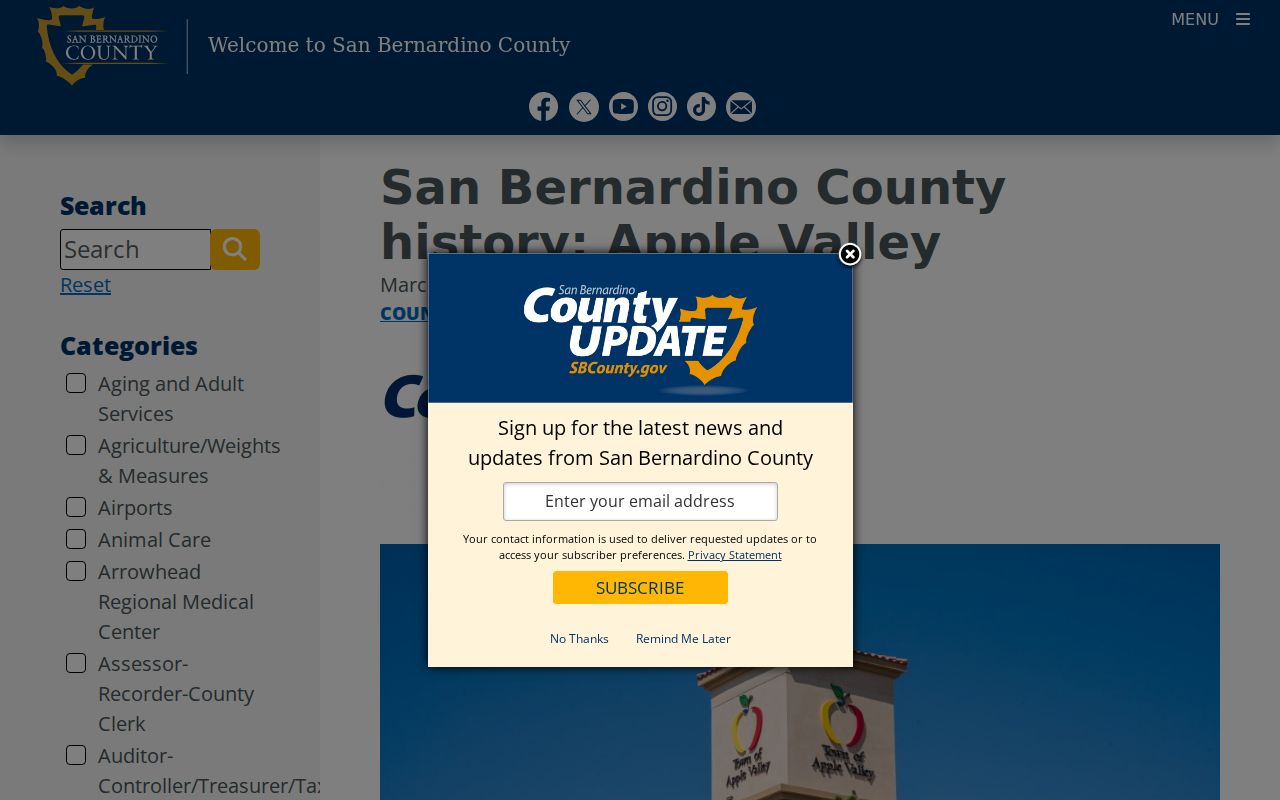
The County’s Apple Valley history feature supplies local development context that can make an aerial or title reference easier to interpret without turning a broad history into proof about one household.
Comparison: Sanborn maps describe mapped structures and risks where coverage exists. Apple Valley aerial series show land and site change across a wider desert landscape. Neither replaces the deed or a custodian-held permit.
Apple Valley Past Residents: Permits Date Change, Not Ownership
Town Building and Safety files can explain when a site gained a structure, room, pool, road tie, or other permitted change. The public OpenGov route is Apple Valley’s permit and records portal, but the research did not confirm its complete field set or online start date. Building and Safety routes through (760) 240-7000 extension 7013. Planning uses extension 7200, Code Enforcement uses (760) 240-7560, and Public Works uses extension 7500.
When the online view is thin, contact the Town Clerk or Government Services through the Town Directory form or make a focused CPRA request. Give the address, APN, date range, department, permit or case number, and record type. The agency can provide an existing disclosable record, but it does not have to create a new occupant list. Inspection is free, while copies may cost direct duplication charges.
Recent Town environmental and cultural-resource appendices also review title, directories, aerials, and historic land use for project parcels. One public example is the Town historical resources study. Project scope matters. A report can illuminate one road or APN without supplying a townwide previous-resident index.
Close Apple Valley Trails With Obituaries
Obituaries, legal notices, and probate files can close a household trail when a former resident died or left an estate. The California Room holds San Bernardino Sunday and The Sun newspaper material from 1894 onward on microfilm or through library databases, along with obituary and genealogy resources. Search the name, spouse, children, former road name, tract, and nearby community. Previous residents may surface through this family trail, but newspapers are secondary evidence, so use them to lead back to a deed, certificate, or court record.
Superior Court CAP serves current and legacy case information, with High Desert work commonly routed through Victorville and probate shared by Victorville and Fontana. Probate petitions can identify a decedent, representative, heirs, beneficiaries, and addresses in public filings. Confidential financial or investigator material may be restricted. Probate Notes appear two weeks before a hearing and remain seven days afterward, so save a relevant note during that short window.
Ask the Victorville clerk for a specified case number or document rather than a broad request for a person’s whole file. A probate result identifies a court role and an estate event. It does not, without more evidence, prove that the decedent lived at the address during every year in question.
Apple Valley Unclaimed Property Trail
The California State Controller’s unclaimed-property search can produce a name, a former city association, and a possible claim route. It is useful when a previous resident or heir trail has a gap, but it is not a current address directory. A claim requires identity documentation, and a listed locality may reflect a past holder or mailing record rather than the person’s last home.
The State Controller unclaimed-property search is the free name-search gateway. The Controller’s unclaimed-property information page explains the official route and cautions against fee demands. Search exact names, former names, initials, and business forms, then compare any city or holder association with a deed, obituary, probate file, or directory entry.
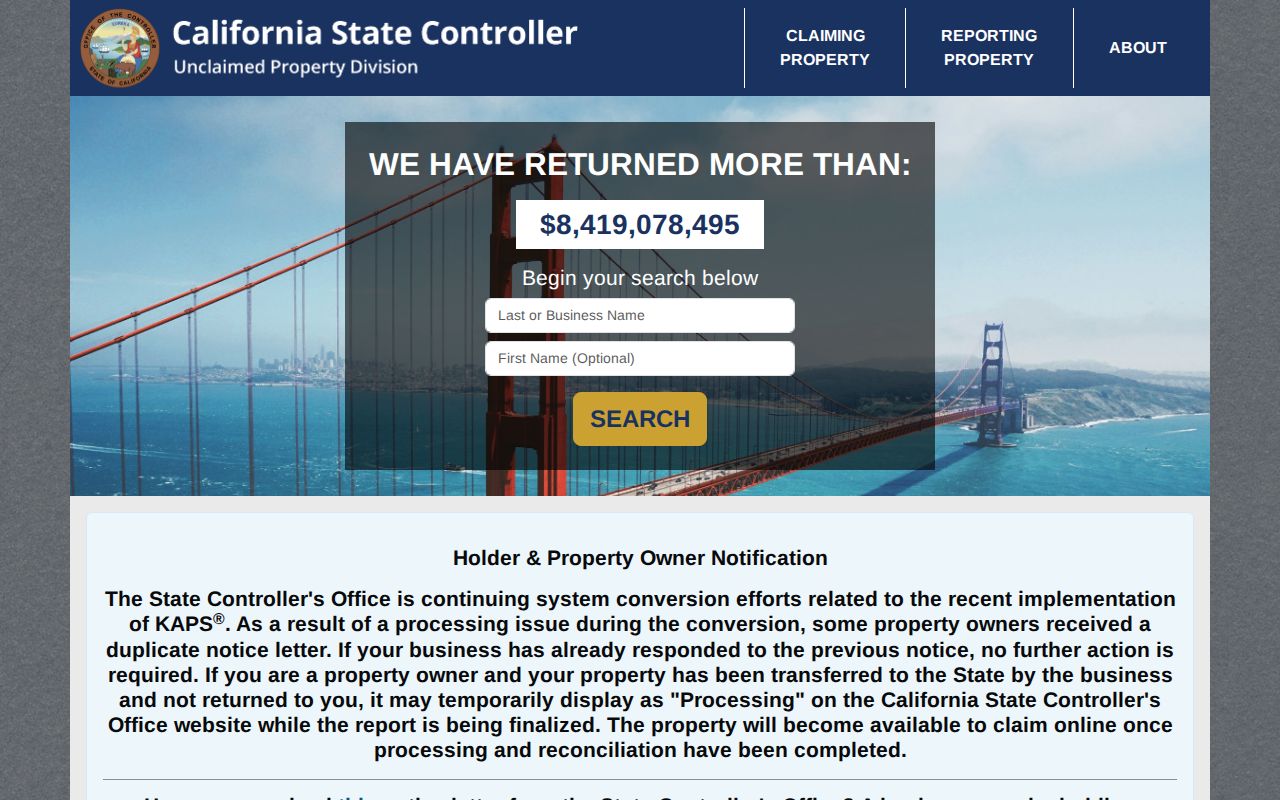
The State Controller search capture shows the correct public starting point for a possible abandoned asset trail, not proof of a person’s present residence.
The State Controller unclaimed-property information page provides the companion claim and anti-scam route.
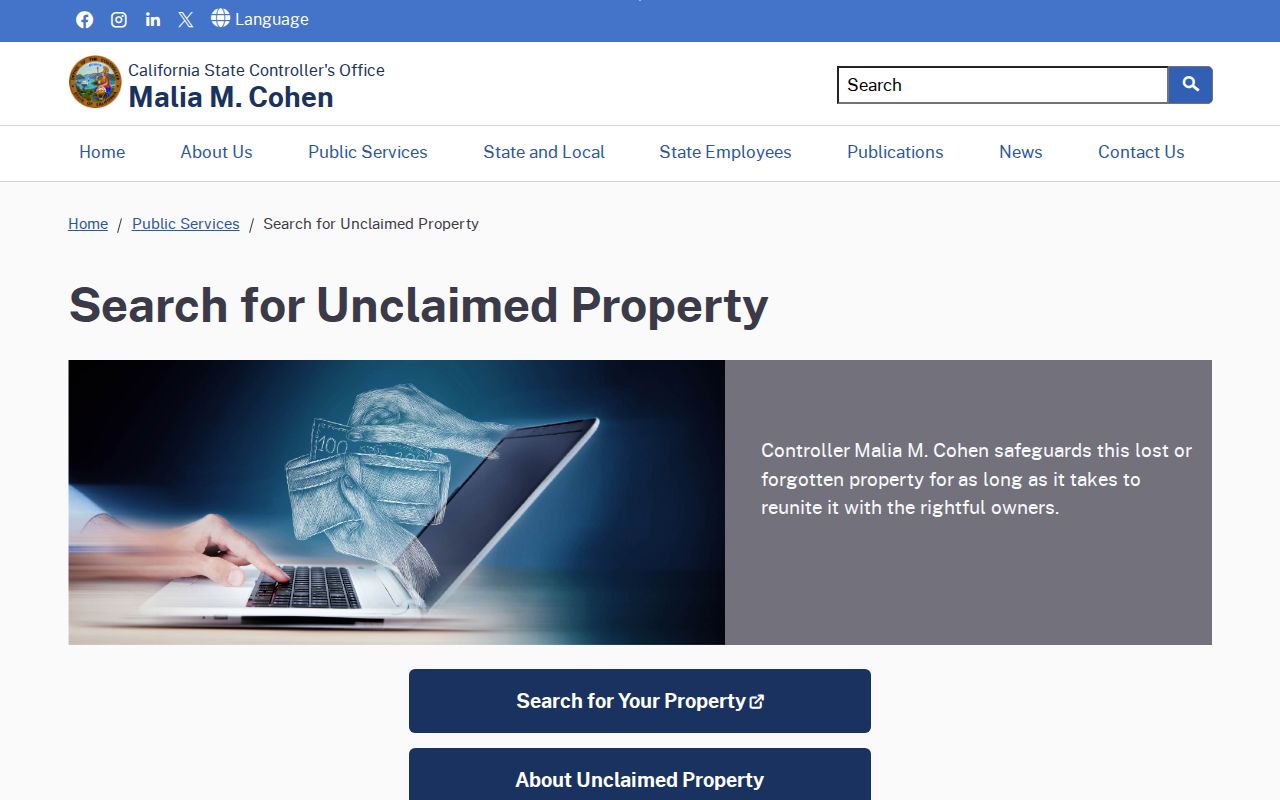
The companion Controller gateway capture reinforces the need to use the State’s claim process and to keep a former-city match separate from a parcel or household match.
Highway 18 and Apple Valley’s Pre-1988 Split
Apple Valley existed as a community and postal name before it became a Town on November 14, 1988. Older county, road, planning, and permit records may therefore sit outside the post-incorporation Town series. Search both County and Town custodians, and mark the date when a record changes hands. San Bernardino County was created in 1853, so older predecessor transactions can also involve earlier county geography or Los Angeles County records.
Highway 18, State Route 18, Happy Trails Highway, and Outer Highway 18 are address forms worth testing. A tract name, ranch reference, business name, or road frontage label may be more stable than a number. Keep APN, legal description, tract, source date, and postal form in an alias log. No authoritative townwide renumbering year was located, so a search should preserve uncertainty instead of inventing a conversion.
ZIP 92307 broadly serves northern and central Apple Valley; 92308 broadly serves southern and eastern areas. Postal city, ZIP, and incorporated Town boundaries do not match. Use USPS address verification for current mail geography, then check the Town or County jurisdiction before assigning an older record to Apple Valley.
Apple Valley Past Residents and Lawful House History
Previous residents research is strongest when it serves house history, genealogy, heir work, or a careful study of local change. A name in a deed, directory, census, obituary, or probate file has a defined role and date. It should not be inflated into a current location claim. Keep notes on source type, image access, spelling, address alias, and the fact each record actually supports. Previous residents are a historical question, not a license to expose a living person.
Safe at Home can provide qualifying people with a substitute mailing address, confidential voter registration, a confidential name-change path, and possible DMV suppression. A protected person may not appear in the same way as a public record. The program does not erase already-public material, but its limits are a lawful reason to stop merging records.
Lawful house history. Use Apple Valley previous-resident records for family history, property history, estate research, and personal curiosity. Do not use a past address or household clue to stalk, harass, intimidate, impersonate, or track a living person.
Note: A careful house history ends with a source-backed uncertainty statement when the record trail cannot establish who occupied the address.