
Apple Valley Neighbors by Block
A block-level Apple Valley neighbors search works best as a source map. Parcel Access identifies the land unit. The Assessor supplies assessment fields. Recorded documents add party and ownership history. Town files show address-based permits or planning activity. Criss-cross books add older listed occupants. Voter records require a permitted purpose and do not support open browsing. Community contacts can help with local life, but no official Town directory of neighborhood-association members was located.
| Source | What It Shows About a Block | Access |
|---|---|---|
| Public Assessor Map / Parcel Access | Subject parcel, adjoining polygons, APNs, situs fields, and assessment identity | Free map and downloads |
| County assessment roll | Owner or assessee field, tax mailing contact, values, use, and characteristics | Parcel search or downloadable files; owner and occupant remain distinct |
| Recorder documents | Deed parties, liens, releases, legal descriptions, and parcel history | Free index; images by counter or order |
| Town permits and planning | Project addresses, applicants, contractors, zoning, notices, or code activity where public | OpenGov or focused Town request |
| Voter registration data | Self-status or approved geographic fields, not a public block roster | Identity-gated service or qualified Elections Code request |
| Criss-cross directories | Address-ordered listed occupants or subscribers from older editions | California Room in person; 1976-present regional run |
| Community groups | Voluntary local contacts, events, or civic connections | No official Apple Valley association roster located; private groups control access |
The table separates what public records show about a block from what people often want to know. An APN is a parcel key. A situs is the physical location. A mailing address is where a notice goes. A listed occupant is a directory entry. None is a complete statement about every neighbor.
Map Apple Valley Neighbors From a Parcel
Apple Valley neighbors research begins with the parcel map, then narrows to the records each adjoining lot can support.
The San Bernardino County Public Assessor Map is the practical starting point for adjacent Apple Valley parcels. Search the known address or use map navigation until the parcel polygon can be selected. Open the subject parcel, save its APN and situs, then click each parcel sharing an edge and the parcels across the road. Open each detail panel separately. A radius or buffer export was not verified, so describe the result as manual map browsing.
- Record the subject address, map date, APN, situs, jurisdiction, and any available parcel or land-use layer.
- Select the first adjoining polygon and keep its APN, situs, owner or assessee field, and mailing address in separate columns.
- Repeat around the subject parcel, marking vacant land, common areas, commercial frontage, and developed lots before calling them homes.
- Compare the map result with a deed, tax bill, permit, or planning record when a person or parcel identity matters.
- For a whole named street, use the full Apple Valley street directory record chain rather than treating the block map as a complete street roll.
Flow: address → parcel polygon → adjoining APN → assessment detail → deed or permit check → carefully labeled block note. The flow finds records around a place. It does not turn owner names into proof of occupancy.
Low-Density Apple Valley Blocks and Neighbors Need Context
Apple Valley neighbors can live beside vacant ground, shared land, or a commercial parcel, so the map needs local context.
Apple Valley’s High Desert geography makes a block less uniform than a dense city grid. One road can pass subdivisions, equestrian lots, vacant acreage, commercial frontage, and common parcels. Consecutive numbers do not promise a continuous row of occupied homes. A large parcel may touch several smaller lots, while a road or drainage feature can break the apparent edge.
Keep the physical map and the record map together. The parcel polygon says where the tax unit sits. The situs field says how the County labels it. The owner or assessee field names an assessment role. The mailing field gives a contact destination that may be elsewhere. A permit applicant may be an agent or contractor. A deed party may transfer an interest without living at the parcel. These distinctions protect the quality of a block result.
ZIP geography adds another layer. ZIP 92307 broadly covers northern and central areas. ZIP 92308 broadly covers southern and eastern areas. Postal city can extend beyond the incorporated Town, so a ZIP search must be filtered by Town or County jurisdiction before it is described as an Apple Valley block.
Keep GIS Scale Fixed for Apple Valley Neighbors
Adjacent-parcel work is easy to overstate when the map scale changes. Start with the subject lot at a level where its boundary is clear. Select edge-sharing parcels first, then parcels across the road. Use aerial or basemap context to tell a common strip, drainage area, or vacant tract from a residence. If a layer for zoning, jurisdiction, fire, flood, or district information is available, record the layer name and date because live choices can change.
There is no verified public owner-radius export in the research. A manual parcel ledger is therefore the defensible block method. Record APN, situs, owner or assessee, mailing distinction, land status, source URL, and date. Do not copy a name from one polygon onto another. Use the deed index when a parcel history matters, and use a Town permit or planning case when a project explains a structure or change.
For a current block search, the map is a way to locate official records, not an invitation to infer private routines. Avoid treating a blank parcel, a shared tract, or an out-of-area mailing address as a personal story.
Apple Valley Voter Record Limits
California My Voter Status is designed for a voter to verify their own registration. It asks for first name, last name, date of birth, and a conditional identification field, with county selection when needed. A matched result may show status, residence or mailing information to that voter, political preference, precinct, districts, polling or vote-by-mail status, and participation history. It is not a public name search for a block.
Elections Code section 2194 limits registration information to election, scholarly, journalistic, political, or governmental purposes. Driver license or identification numbers, Social Security components, signatures, and protected addresses are not open fields. A qualified requestor must apply to the Secretary of State or San Bernardino County Registrar of Voters, identify the permitted use, describe the geographic unit and fields, and follow the release rules. No current street-range fee was located in accessible official text.
That boundary is part of the answer. A missing person in a block record may reflect confidentiality, an inactive registration, a spelling issue, a recent update, or a protected address. Do not fill the gap with an assumption.
Historic Apple Valley Neighbors in Print
Earlier neighbors are often found in address-ordered print sources rather than a current parcel roll.
The California Room’s regional criss-cross collection runs from 1976 to the present. Telephone books reach back to 1918. These address-ordered sources can show a listed subscriber or occupant, but Apple Valley inclusion depends on each edition. Earlier households may instead appear in city directories under San Bernardino, Victor Valley, Victorville, a tract, a ranch, or another community heading.
The federal census is public through 1950 in 2026. It can show households and nearby names at a census date, but enumeration order is not a perfect modern block map. Pair names, ages, birthplaces, occupation, tenure, and address text with parcel geometry and a legal description. The California Room also holds newspapers, obituaries, Great Register material, yearbooks, and genealogy quarterlies. Those sources can reconnect a block to a school, club, or family history without exposing private contact data.
Search spelling variants, initials, compound surnames, former names, and local road forms. A missing directory entry can mean an unlisted number, move, coverage change, or alias. It is not proof that a parcel had no household.
Apple Valley Neighbors: Community Contacts, No Official Roster
Apple Valley neighbors who share a civic group may know the right public contact, but membership remains a private matter.
The official Town resident-services page provides municipal links for permits, zoning, code enforcement, library services, and Apple Valley Connect. It does not publish a comprehensive neighborhood-association or HOA member directory. Private associations may appear as corporations in the Secretary of State search or as names in property and fictitious-business records, but a filing does not disclose a member roster. Neighborhood Watch and civic groups can be useful local channels when participation is voluntary, yet their home and contact lists are not public resident directories.
| Town resident services | Official municipal links for permits, zoning, code, library, and community services; no official neighborhood roster located. |
|---|---|
| Town Directory | Routed contact form for departments and public-record subjects; it is not a private member list. |
| Sheriff community channel | County Sheriff and Apple Valley Station channels can address safety or records questions; participant contact lists are not public. |
| Library reference desk | Newton T. Bass Branch can point to civic history, directories, newspapers, and yearbooks. |
| Private associations | No official Apple Valley association directory was located. Ask a group directly and respect its membership and contact rules. |
| Business entities | California bizfile can show public business filings, not a residential or membership roster. |
When no official roster exists, the right result is a documented gap. Do not replace it with a scraped list or a claim that a private association represents every household in Apple Valley.
Official Rolls Versus Commercial Neighbor Tools
Commercial neighbor tools often combine public records, marketing data, user submissions, and uncertain matches. They can be quick, but a name or address match may be stale, merged with another person, or detached from its source. Official records take more work because each custodian answers a narrow question. The contrast matters when a block search could affect a family history, a civic concern, or a safety decision.
| Source Category | Strength | Blind Spot | Best Use |
|---|---|---|---|
| Assessor and GIS | Parcel geometry, APN, situs, assessment fields | Owner or assessee is not automatically an occupant | Start and map the block |
| Recorder index | Recorded party and legal-document trail | No street-address ownership search; images are office or order access | Confirm property history |
| Town records | Address-based permit, planning, and code chronology | Coverage and exemptions vary; applicant may be an agent | Explain site change |
| Library directories and census | Historical listed occupants and households | Edition gaps, unlisted people, and date snapshots | Family and neighborhood history |
| Commercial aggregated results | Fast cross-source lead generation | Unclear provenance, conflation, stale data, and paid access | Only a lead to verify with the custodian |
Use the official source that owns the fact. If a commercial result conflicts with Parcel Access, a deed, or a Town record, the conflict is a reason to stop and verify, not a reason to repeat the claim.
Apple Valley Sheriff and Registry Sources
Some public tools describe a record or affiliation around a block without describing a household. The San Bernardino County Sheriff Inmate Locator is a current booking and custody tool. It can show a booking number, facility or unit, and visiting route. County police services for Apple Valley are supplied by the Sheriff. The locator is not a directory of former residents, and booking photographs generally are not released.
Open the Sheriff inmate locator to see the source capture below.
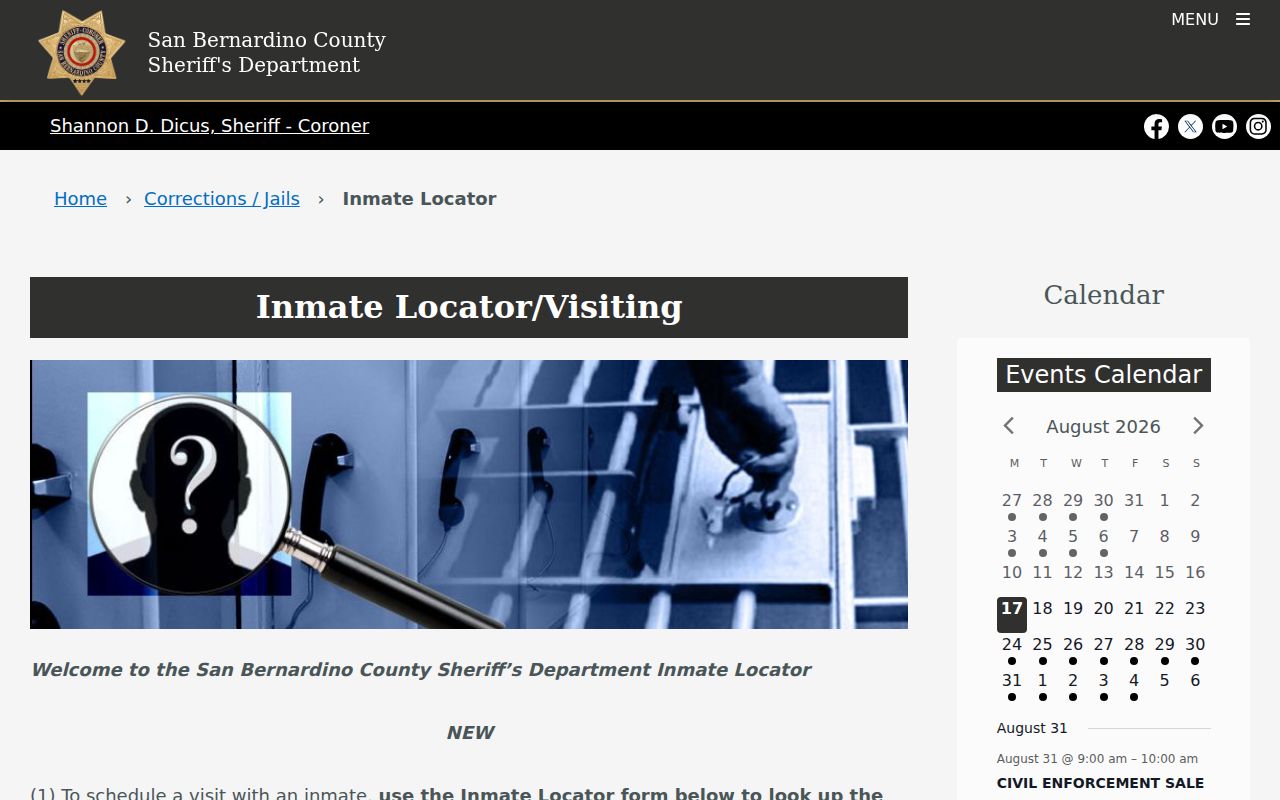
The Sheriff locator capture shows a narrow custody lookup. A current result must not be turned into a claim about a person’s home or any block.
For an incident or report, use the Sheriff public-records request page. Requests may be made through County NextRequest, in person at a station or Records Division, or by mail to the Records Division, PO Box 569, San Bernardino, CA 92402. Anonymous requests are generally accepted, while records limited to victims or authorized people may require identification. Privacy, juvenile, medical, investigative, and safety exemptions can remove details.
Open the Sheriff public-records page to see the request source captured below.
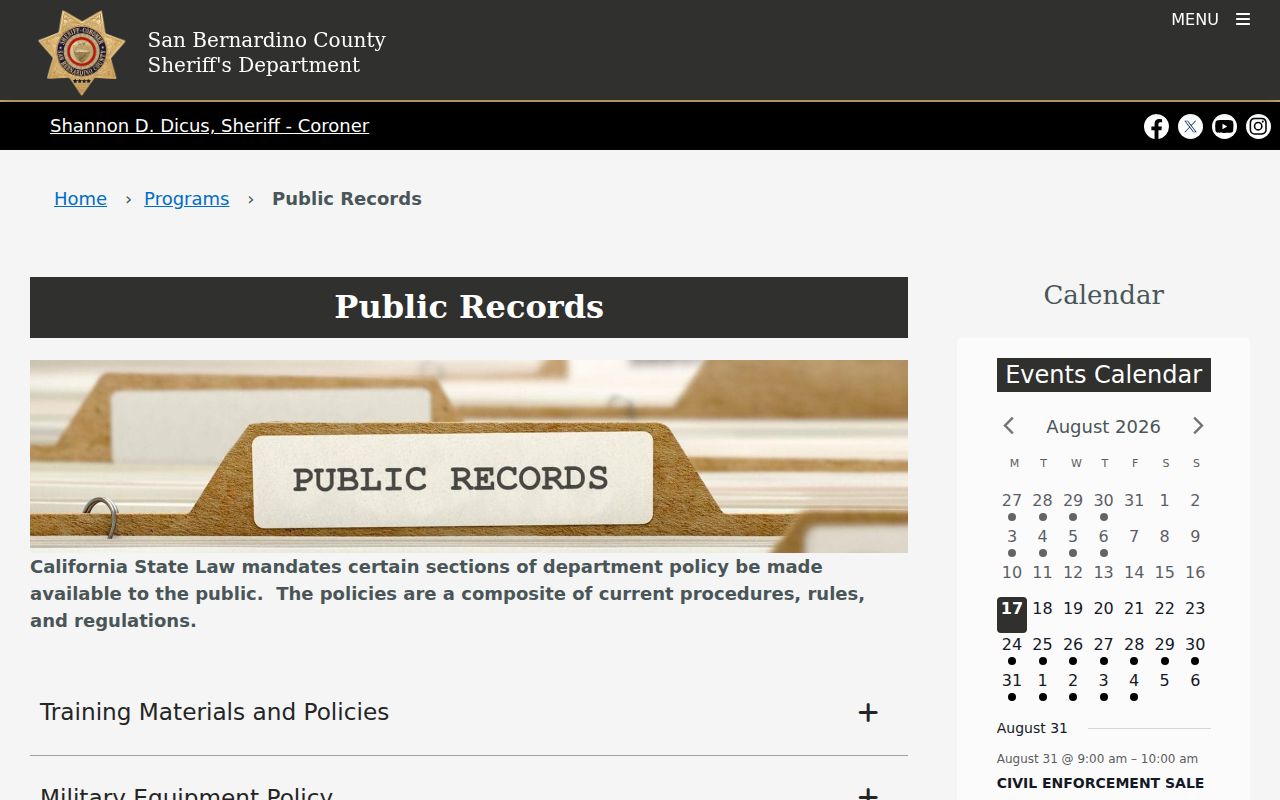
The public-records image identifies the proper request channel for a specified event, date, address, or report. It does not create a block roster.
California’s Megan’s Law website has name and location search modes with statutory warnings and exclusions. It should be used only for the purpose the law allows. A displayed location is not a license to approach, monitor, threaten, or harass anyone.
Open the California Megan’s Law site to see the registry source captured below.
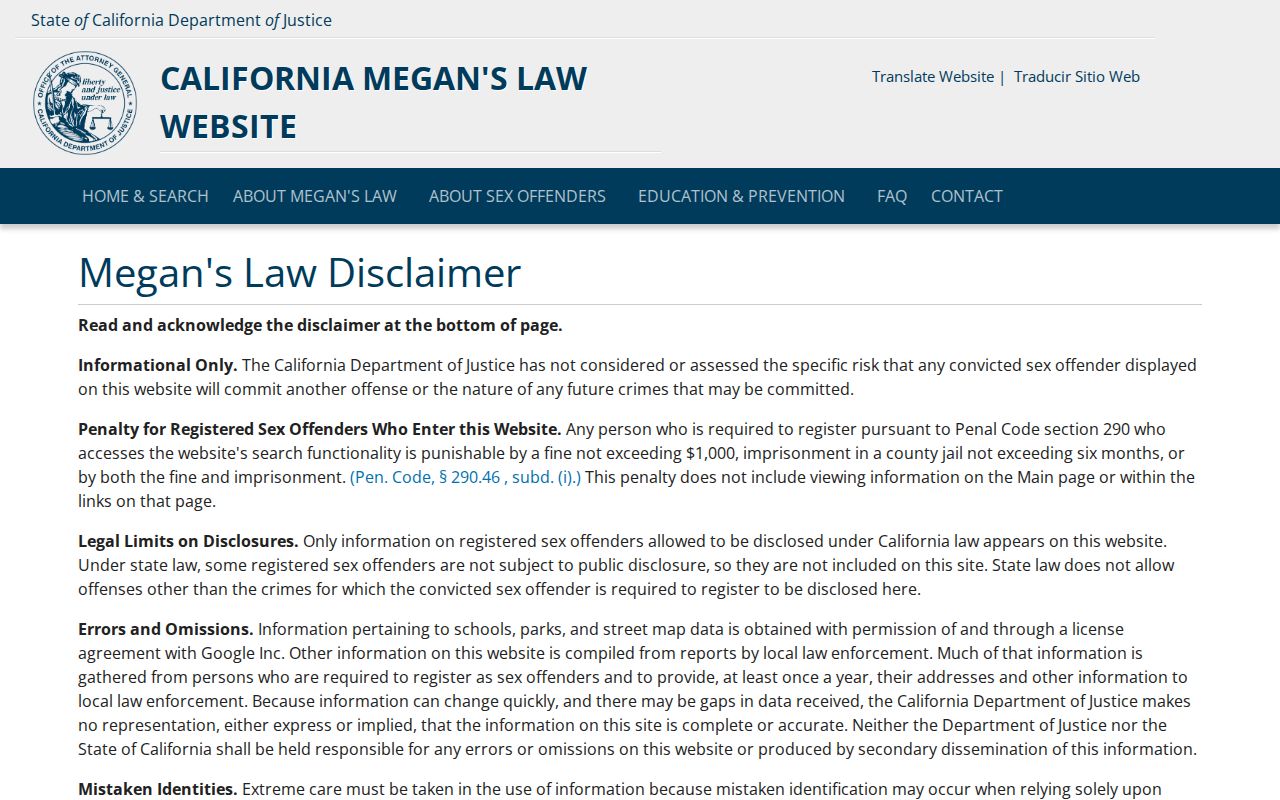
The registry capture belongs to a legal and safety context, not a claim about who lives on a private block.
For public professional or business context, the California Department of Consumer Affairs license search accepts board, license type, name, number, city, and county filters. A license can show status, dates, or discipline where published. It does not prove a home address or a neighbor relationship.
Open the DCA license search to see the professional-record source captured below.
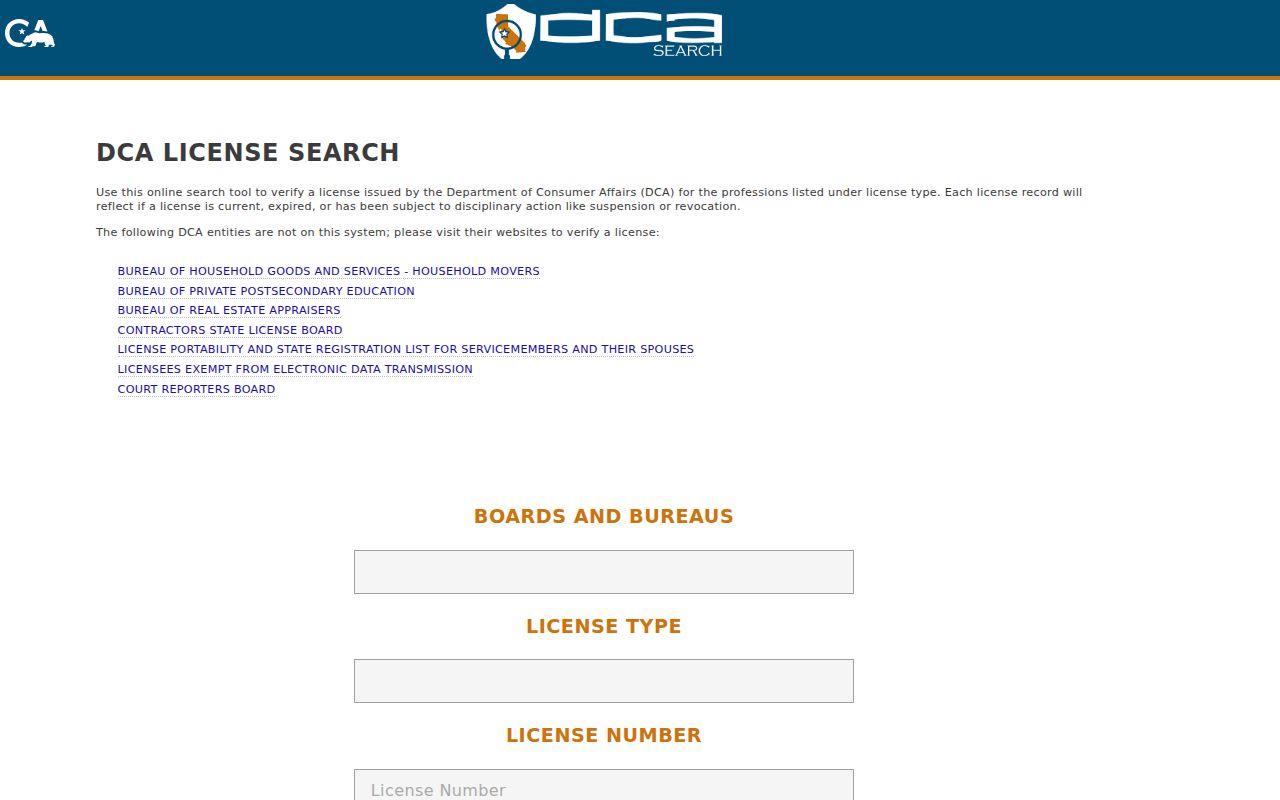
The DCA image shows an official affiliation lookup whose public fields are narrower than a personal profile.
California Secretary of State bizfile Business Search can search entity name or number and expose public filings and imaged Statements of Information. It may show an agent or filing address. The Secretary of State warns that ownership, phone, email, subsidiaries, and related businesses are generally not made of record. A business filing is not residence evidence.
Open the California bizfile Business Search to see the entity source captured below.
The business-search capture helps distinguish a public commercial filing from a private household record.
If the question concerns state-prison custody rather than County booking, the separate California Department of Corrections and Rehabilitation locator is the correct state channel. It does not replace the County locator or a block-level parcel search.
Safe at Home Changes Block Visibility
Some Apple Valley neighbors are protected by a confidentiality program, so an ordinary block search may show less by design.
California Safe at Home gives qualifying survivors and people who fear for their safety a substitute mailing address, confidential voter registration, a confidential name-change path, and possible DMV suppression. Government entities accept the substitute address subject to statutory exceptions. Government Code section 6209.5 can protect a residence address in specified real-property instruments. These rules explain why a protected person may not appear in the same way as an ordinary parcel or voter record.
Safe at Home does not erase material that was already public. It does mean that a block search should not try to reverse a confidentiality program through inference. Keep public owner, mailing, situs, and directory fields separate, and stop when the next fact would require restricted data. The official Safe at Home program page and its eligibility guidance are the proper source for current limits.
Privacy Limits on Apple Valley Neighbors
A public block search cannot show every household member, child, utility customer, delivery record, unlisted telephone detail, school record, medical patient, or protected voter. It also cannot turn an owner mailing address into proof of occupancy. Public availability of a parcel or name does not authorize surveillance, repeated unwanted contact, impersonation, or threats.
Use the smallest source that answers the lawful question. Parcel Access can map adjoining lots. A deed can confirm a recorded transfer. A Town request can seek an existing permit. A library volume can show a historical listing. A community contact can explain a civic group. If none of those sources supports the requested fact, the honest answer is that the fact is not public or was not located.
Lawful personal use. Apple Valley neighbors research is appropriate for getting to know a block, family history, civic records, reconnecting, and personal safety awareness. Do not use a neighbor lookup to stalk, harass, intimidate, impersonate, or harm anyone.
Note: A responsible block record names the parcel, source, date, record role, and limits instead of claiming to know every neighbor.